Can You See the Milky Way Clearly From Ayers Rock Resort?
Can you see the Milky Way clearly from Ayers Rock Resort? Yes – you absolutely can, and it’s so good on the right night that it’ll bring you up short. But like everything in the Red Centre, it’s all about timing, the right spot, and having the patience of a desert dweller rather than just expecting a quick postcard moment.
I’ve watched heaps of people come back from dinner, still lit up by the resort’s glow, convinced they’ve blown it. Ten minutes later – after stepping out into the dark – they’re just standing there in stunned silence – no phones, no chatter, just the vast stillness of the desert doing its thing.
Why the Red Centre Sky is a Game Changer
The Northern Territory doesn’t mess around when it comes to scale, and the sky is no exception. Central Australia is far from major cities, coastal moisture, and industrial haze. That combination gives us some of the cleanest air and darkest skies you can find without going completely off the grid.
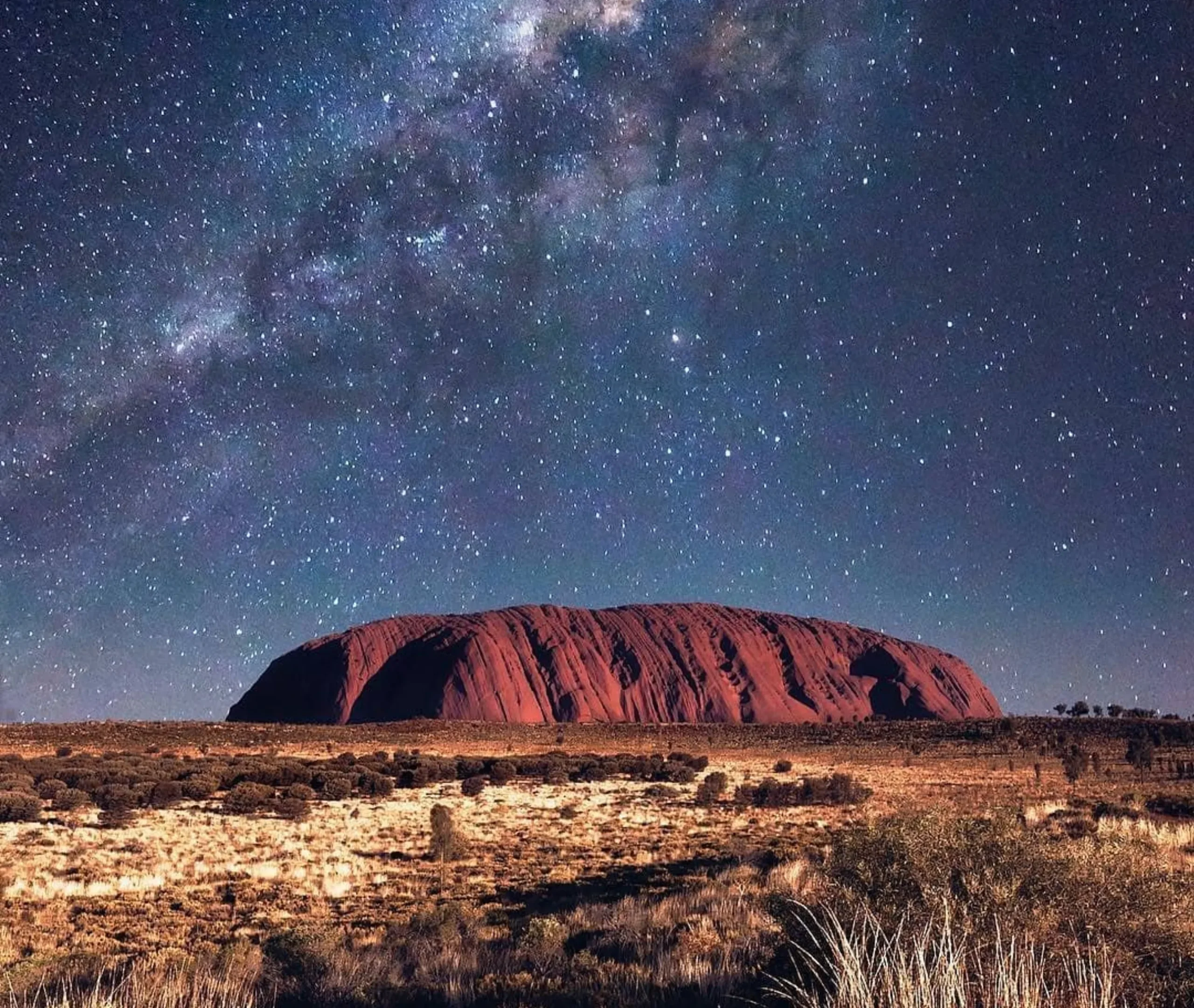
Out here, the night sky feels a lot more intimate. The Milky Way doesn’t just suddenly blaze on like a floodlight – it sort of reveals itself as your eyes get used to the dark. The stars start to multiply. Dark gaps start to appear between them. You start to pick out patterns – not just the constellations, but the depth of the whole shebang.
That’s why people schedule their Red Centre day tours around sunset and into the evening. They come for Uluru and Kata Tjuta, alright, but they hang around for what happens after dark.
Where The Resort Fits Into The Bigger Picture
Ayers Rock Resort is a stone’s throw from the base of Uluru, within Uluru-Kata Tjuta National Park. That distance is key – you’re close enough to be comfortable (a decent bed, a good feed, a coldie at the end of the day) but far enough away from the main light pollution to make the stars really pop.
If you stand straight under the resort lights, the Milky Way will look all washed out. But step away from the main walkways a little bit, and the difference is like night and day (no pun intended). I’ve seen people walk less than 200 metres and suddenly get the whole picture.
This is one reason operators like Autopia Tours offer so many Red Centre day tours around Uluru and Kata Tjuta, leaving the evenings free. The daylight will blow you away, but the night sky finishes the job off nicely.
Uluru, Kata Tjuta & The Power of Darkness
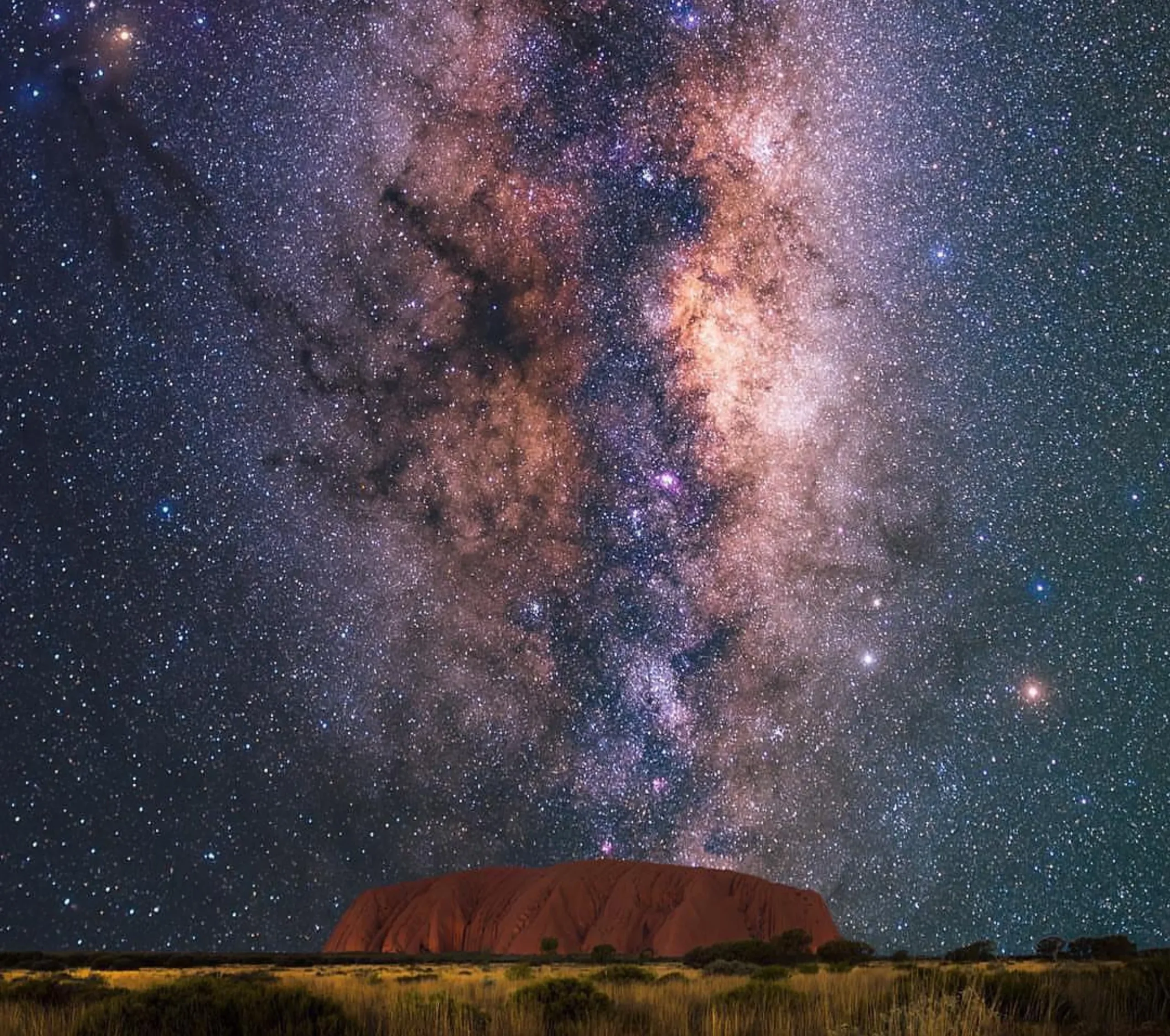
Uluru and Kata Tjuta are more than just daytime icons. They’re also way out in the middle of nowhere, inside a National Park that keeps artificial lighting to a minimum. And when the sun goes down, nothing gets in the way of the view.
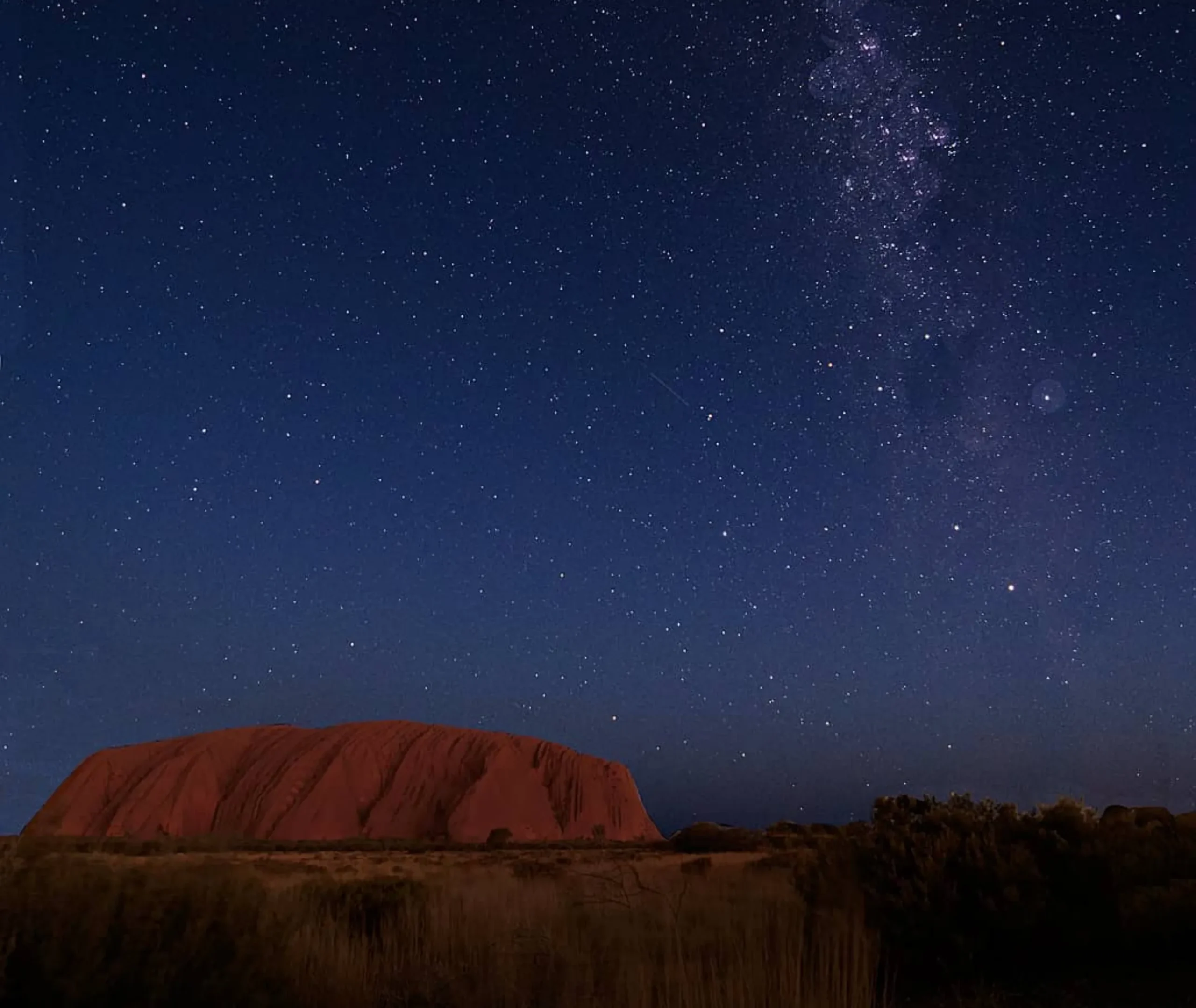
On a clear night, the Southern Cross is as easy as spotting your house. The Milky Way stretches out wide, and you can even see the dark dust lanes without any binoculars. And that’s one of those places where the sky doesn’t feel like a ceiling – it feels like a dome.
Travellers on longer day trips through the Red Centre often tell me this is when Uluru finally clicks for them. Not when they’re taking sunrise photos, not at sunset, but when they’re just standing quietly under the stars.
Timing It Right: Seasons & Moon
Your expectations are about to take a reality check. The Milky Way isn’t like a public holiday that you can visit whenever you want. It’s got its own schedule to keep.
Nights are a lot cooler from April to September, which makes it easier to spot the Milky Way’s bright centre in the evening sky. But if you’re heading to the Northern Territory in winter, be prepared for some seriously chilly nights. If you can handle the cold, though, the clarity is just as amazing as the summer months, which is probably why all the stargazers in their right mind are building itineraries around visiting Uluru in the dead of winter.
But the other seasons aren’t quite so good. From October to March, the heat haze and dust get in the way, and you’ll be lucky to catch a glimpse of the Milky Way unless you’re up late or out before dawn. And if the moon is full, forget about it.
Moon phase is probably the biggest thing to plan around if you really do want to see the night sky in all its glory. The full moon will largely obscure all detail. And so, many of the day tours in the red centre already do this – they just don’t go out of their way to tell you about it.
What You’ll Actually See With Your Own Eyes
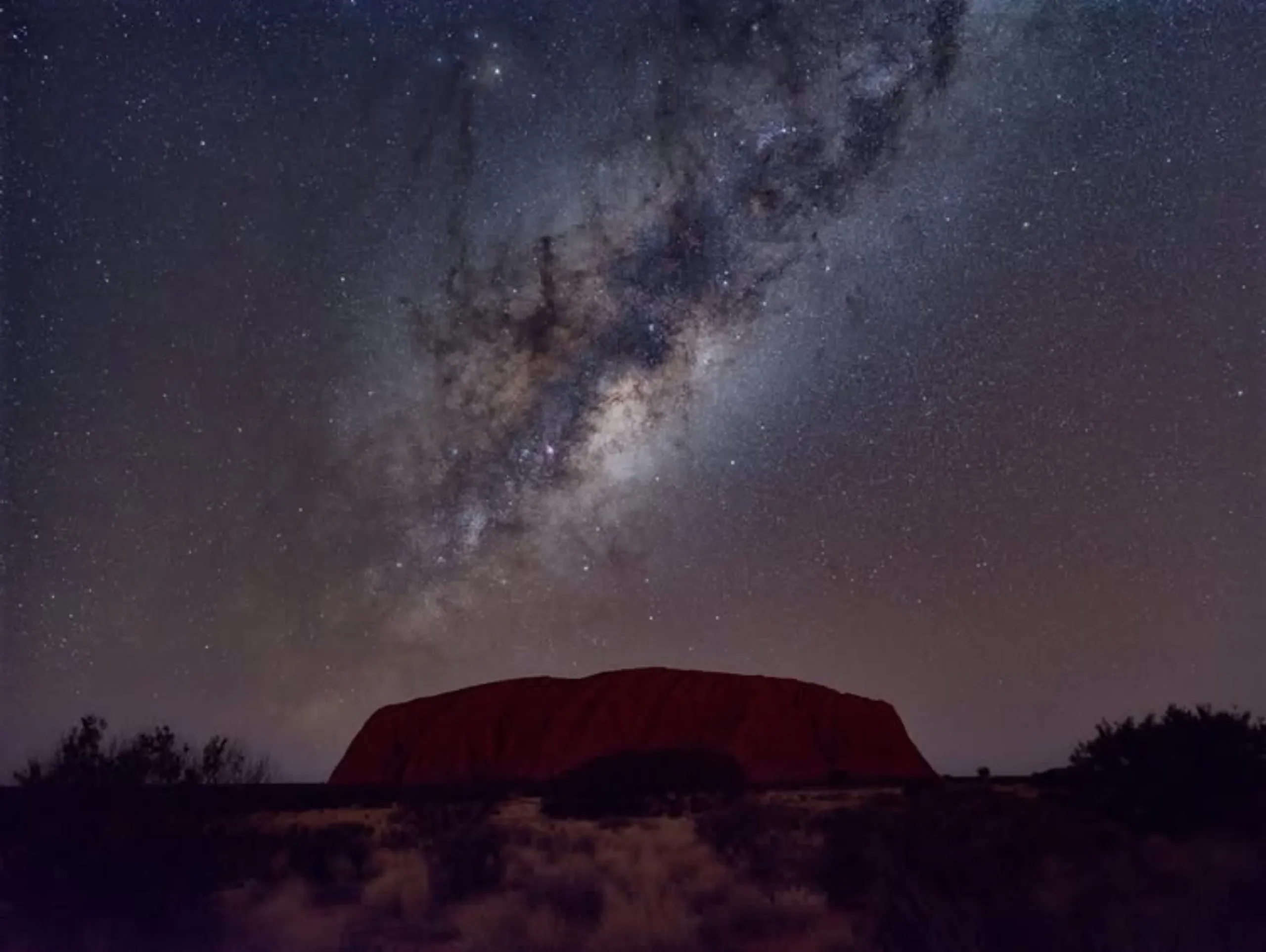
Let’s not be coy – what you see with your own eyes isn’t going to be anything like those heavily photoshopped pictures of the night sky on social media. No electric blues, no neon pinks. And honestly, who needs that?
On a good night (and that’s assuming you’ve got a clear sky and no moon in the way), you’ll see a broad band of light stretching across the sky – the Milky Way. It gets thicker the closer you get to the horizon, and there are clusters of stars that are so packed together they sort of blur into one big mass. With a bit of practice or some help from a guide, you can pick out a few of the planets and some of the major stars. And if you’re lucky, you might even be able to spot a detail or two like the rings of Saturn, which always seems to get a pretty cool reaction from people seeing it for the first time.
You don’t need to be an expert on the solar system to enjoy the night sky – you just need to take a moment to look up and wait for a bit.
Indigenous Australian Knowledge Of The Stars
For the Indigenous Australian communities, the stars aren’t just something to look at – they’re part of their whole way of life. They’re the stories, the laws, the calendar. For them, the sky is connected to animal behaviour, the seasons, and their responsibility to their land.
Lots of the guided astronomy tours in and around Uluru will give you a bit of a taste of this – showing you how certain stars mark specific times for travel, ceremonies or hunting for food. This knowledge sits alongside Western astronomy; they’re not competing.
It’s worth pausing to take this in. The sky gets so much richer when you understand that the people have been reading and remembering it for tens of thousands of years.
Guided Experiences & Evening Options
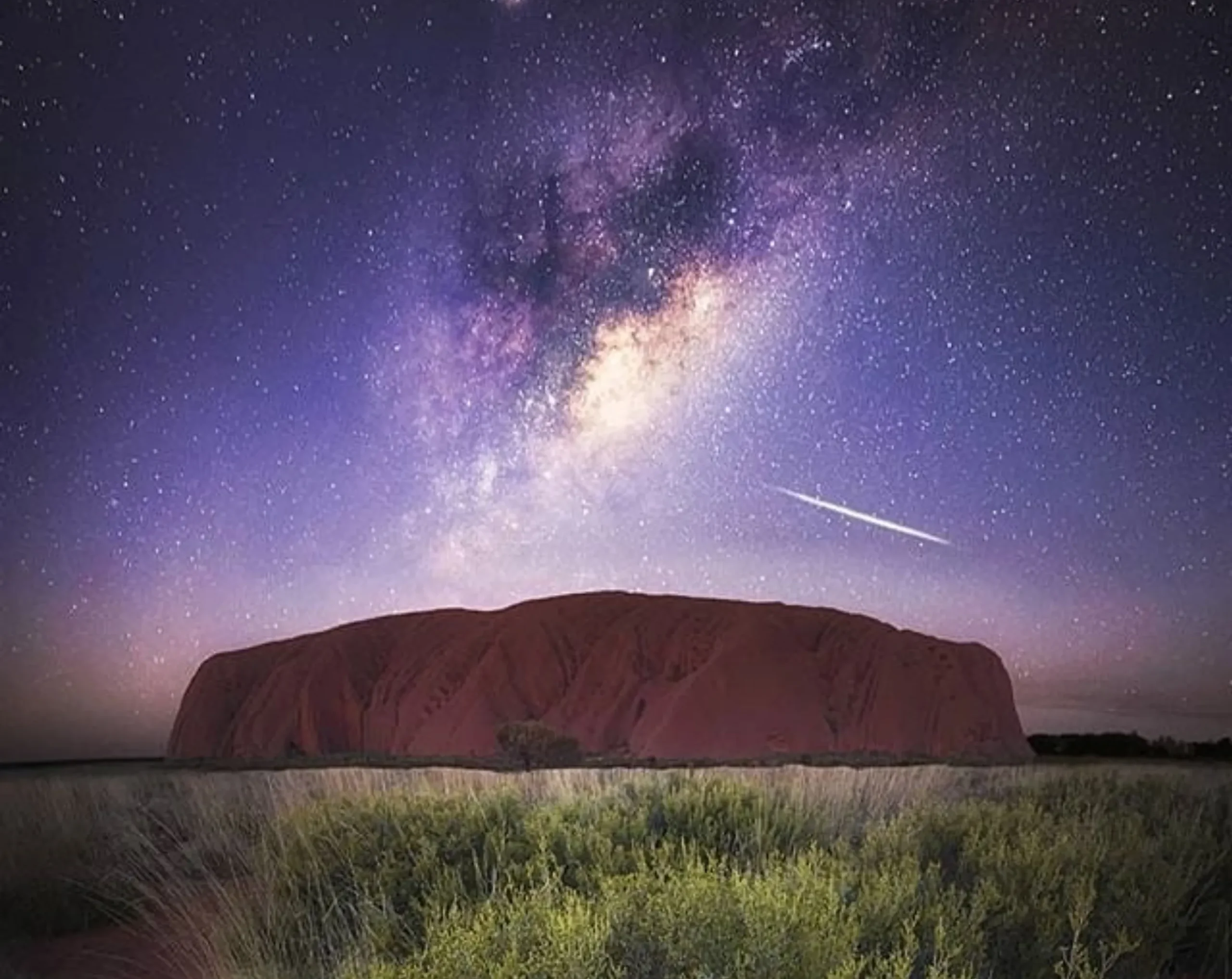
If you don’t have the time or the inclination to figure out stargazing on your own, then there are a few ways to experience the sky in a more structured way. Some visitors attend events such as the Sounds of Silence, while others prefer to wander at night listening to an astronomy talk.
You can book curated astronomy sessions or go on Uluru Astro Tours, for example. These tours delve into the details of the stars and highlight constellations & other celestial objects you might otherwise miss. Some of these tours will also touch on international astronomy & the ancient stories from places like China, but local knowledge is always the most fascinating.
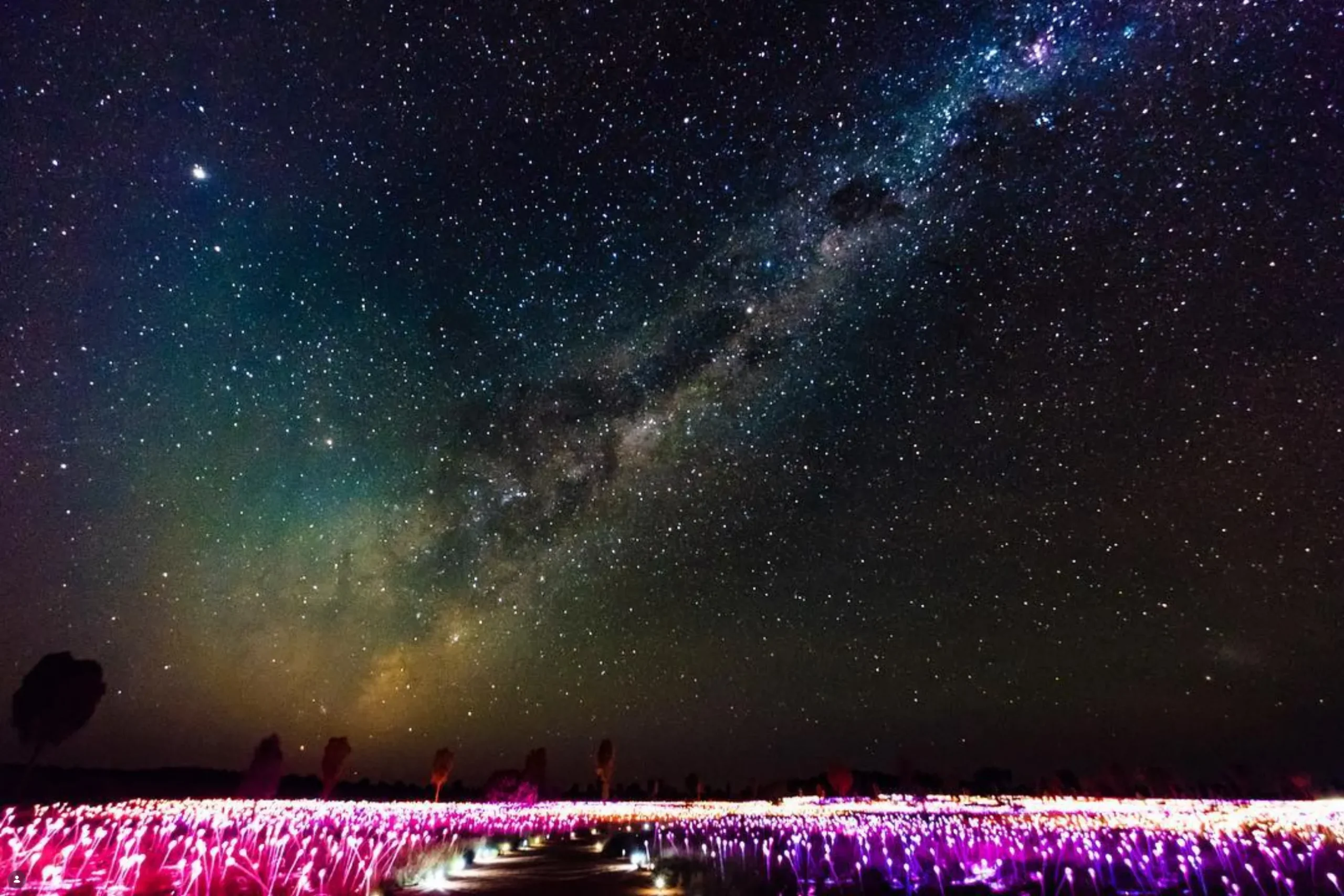
The Field of Light is pretty spectacular, but to be honest, it really messes with the contrast of the stars – so if you’re on the hunt for a clear view of the Milky Way, my advice is to treat it as a separate experience and head into a darker area later.
Apps, Cameras & Keeping Things Simple
You don’t need to break the bank on fancy gear to enjoy the stars around here. Any basic phone with a star-gazing app will let you identify constellations & planets without ruining your night vision.
Taking a serious photo of the stars is a whole different ball game. Long-exposure shots require a tripod and a lot of patience – and for most people, taking a camera out is just plain annoying. If you are going to get serious about photography, though, then a lightweight tripod like the Radian Carbon Fibre is a pretty useful investment.
Just a heads-up: if you plan to sell any photos you take, you’ll need a Media Permit. Holiday snaps are fine, but if you are looking to make a living from your photos, then it’s a different story.
Who’s Running What Around Uluru
Most of the hotels and more upmarket experiences in the area are operated by Voyages Resort. That’s the same people who run Ayers Rock Resort & all the dining & activities that go along with it. Then you’ve got day tour operators like Autopia Tours who put on structured tours of the red centre that include Uluru, Kata Tjuta and surrounding highlights – often with the evenings free for stargazing.
This mix works well. Daytime exploration, night-time reflection.
A Quick Reality Check
| Factor | Effect On Milky Way Viewing |
|---|---|
| Moon phase | Biggest influence |
| Distance from resort lights | Immediate improvement |
| Season | Winter offers clearer skies |
| Dust & wind | Can reduce sharpness |
| Guided astronomy | Adds meaning, not darkness |
Final Thoughts From Under The Stars
Can you see the Milky Way from the Ayers Rock Resort? The answer is a resounding yes – but only if you take the time to look for it. Step away from the artificial lights, pick the right moment and don’t rush it – let the vastness of the night sky just wash over you.
No matter what adventures you’ve had during the day – hiked out on a red centre day tour, wandered through the magnificent Kata Tjuta or watched the sun go down behind Uluru – the night sky puts the icing on the cake. It’s an ending that doesn’t need hype – just wait until you’re ready and let it blow you away.
FAQ
Is Uluru-Kata Tjuta National Park Good For Stargazing?
To be honest, yes, it is! Protected national parks like this one help minimise light pollution, making it one of the best places to see the stars in Australia.
Can You Spot The Southern Cross From Ayers Rock Resort?
You bet you can. On clear nights, the Southern Cross is easy to spot.
Are There Any Indigenous Astronomy Experiences Available?
You can be sure there are. Several tours offer the opportunity to learn about the night sky from an Indigenous Australian perspective, including how the movements of the stars align with their culture and the changing seasons.
Do You Need A Telescope To See The Milky Way?
No way, you don’t need any fancy gear to spot the Milky Way. On a clear, moonless night, you can just pick it out with your own two eyes. Telescopes are great for getting a closer look at the planets, though.
Is The Field Of Light Really Worth Trimming Down For?
Okay, so the Field of Light is pretty darn impressive – but if you’re looking to catch a glimpse of the Milky Way, then it’s not really the best way to go. Just pair a visit to the Field of Light with a later walk out into the darker areas, and you’ll be set.